
How to Fix a Frozen iPhone Not Responding to Touch: Solved in 2026
TL;DR:
A frozen iPhone can usually be recovered by restarting, charging, updating iOS, or using a system repair tool.
- Common causes include iOS glitches, low storage, problematic apps, failed updates, battery issues, and hardware problems.
- Force restart based on your iPhone model; if needed, charge it, then use Recovery Mode and choose "Update" before "Restore" to avoid unnecessary data loss.
- Use iOS System Recovery via "More Tools" > "iPhone System Recovery", click "Start", enter Recovery/DFU Mode, download the firmware, and repair the system.
- Learn whether low battery or charging can cause freezing and whether force restarting can erase your data.
When your iPhone suddenly freezes and stops responding to touch, it can be hard to know what to try first. The good news is that a frozen iPhone does not always mean there is a serious hardware problem. A quick force restart or a little charging may be enough to get it working again. If those basic fixes fail, Recovery Mode, Apple Support, or a professional iOS repair tool can help. In this guide, we will walk you through the most practical ways to unfreeze an iPhone and get it back to normal.
Part 1: Why Is My iPhone Frozen and Not Responding to Touch?
An iPhone can suddenly freeze and stop responding to touch for several reasons. Sometimes, it is just a temporary system glitch, while other cases may be related to software problems, low storage, battery issues, or a faulty app. If the screen is completely unresponsive, it can be difficult to tell what went wrong right away. Here are some common causes to consider:
- Temporary iOS glitches: A minor system error can make the screen or some functions temporarily stop responding.
- Low storage space: When your iPhone is almost full, iOS may become slower or freeze unexpectedly.
- Problematic apps: An app that crashes or conflicts with the system can sometimes cause the device to become unresponsive.
- iOS update issues: Bugs or interruptions during an iOS update may lead to freezing or other system problems.
- Battery or charging problems: A critically low battery or an issue with the charging process may also cause the iPhone to stop working normally.
- Hardware problems: If the screen or other internal components are damaged, touch input may fail even when the iPhone is powered on.
Part 2: How to Fix an iPhone That Is Frozen
If your iPhone is frozen and the screen does not respond to touch, start with the simplest solutions first. A force restart can usually clear a temporary system glitch without affecting your personal data. If that does not help, try charging the device or using Recovery Mode to update or restore iOS.
Fix 1: Force Restart Your iPhone
A force restart is usually the first thing to try when your iPhone is completely unresponsive. The button combination depends on your iPhone model.
iPhone 8 or later, including iPhone SE (2nd generation and later):
- Press and quickly release the Volume Up button.
- Press and quickly release the Volume Down button.
- Press and hold the Side button until the Apple logo appears. This may take more than 10 seconds.
iPhone 7 and iPhone 7 Plus:
- Press and hold the Side button and Volume Down button at the same time.
- Keep holding both buttons until the Apple logo appears.
iPhone 6s or earlier, including iPhone SE (1st generation):
- Press and hold the Home button and the Side button or Top button at the same time.
- Keep holding them until the Apple logo appears.
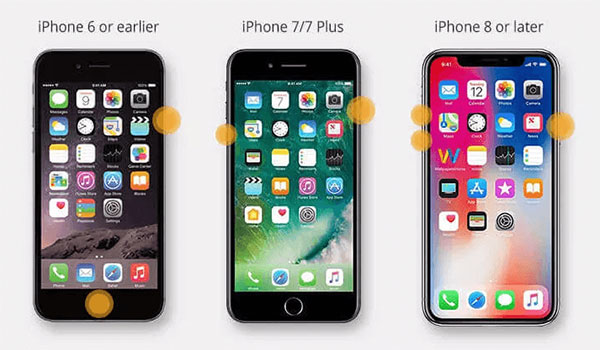
Once your iPhone restarts, check whether the touch screen works normally again. (iPhone Keeps Restarting?)
Fix 2: Charge Your iPhone
A very low battery can also prevent your iPhone from starting or responding normally. Connect it to a working charger and leave it charging for a while. Apple recommends charging an iPhone that will not turn on for about one hour before trying again.
Fix 3: Update or Restore Your iPhone in Recovery Mode
If your iPhone is stuck on the Apple logo, repeatedly fails to start, or cannot be recognized normally by your computer, Recovery Mode can help reinstall iOS. Apple recommends trying "Update" before "Restore", because "Restore" erases the iPhone.
First, connect your iPhone to a computer with a USB cable. On a Mac, open Finder. On a Windows PC, open the latest Apple Devices app or iTunes.
iPhone 8 or later, including iPhone SE (2nd generation and later):
- Press and quickly release the Volume Up button.
- Press and quickly release the Volume Down button.
- Press and hold the Side button until the Recovery Mode screen appears.
- When your computer detects the iPhone, select "Update" and follow the onscreen instructions.
iPhone 7 and iPhone 7 Plus:
- Connect your iPhone to the computer.
- Press and hold the Side button and Volume Down button together.
- Keep holding them until the Recovery Mode screen appears.
- When prompted on the computer, select "Update".
iPhone 6s or earlier, including iPhone SE (1st generation):
- Connect your iPhone to the computer.
- Press and hold the Home button and the Side button or Top button together.
- Keep holding the Home button until the Recovery Mode screen appears.
- Select "Update" when the option appears on your computer.
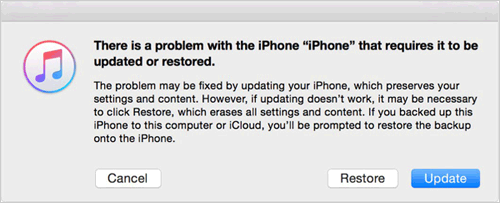
If "Update" does not fix the problem, you can try "Restore". However, keep in mind that restoring your iPhone reinstalls iOS and erases the device, so make sure you understand the data-loss risk before proceeding. (iPhone/iPad Recovery Mode Does Not Work?)
Fix 4: Contact Apple Support
If your iPhone is still frozen after a force restart, charging, and Recovery Mode, the problem may require professional service. This is especially worth considering if the screen was recently damaged, the buttons do not work, or the device cannot enter Recovery Mode. Apple also recommends getting service when you cannot update or restore the iPhone successfully.
Part 3: Fix a Frozen iPhone with iOS System Recovery
If the basic fixes above fail to get your iPhone working again, you may need a more comprehensive system repair solution. In this case, iOS System Recovery is a practical option for dealing with frozen, stuck, or unresponsive iPhones. It can help repair common iOS system problems without requiring complicated operations. You can download and install it on your computer first and then follow the steps below.
Key Features of iOS System Recovery:
- Fix common iOS problems, including frozen screens, stuck Apple logos, and unresponsive iPhones, without deleting existing data.
- Repair iPhones stuck in Recovery Mode, DFU Mode, headphone mode, or displaying a black or white screen.
- Provide two repair options, including a standard mode for fixing problems without data loss and an advanced mode for more serious system issues.
- Support the latest iOS versions and a wide range of iPhone models, including iPhone 18 and earlier.
- Offer a straightforward interface that makes the repair process easy to follow, even for users without technical knowledge.


Step 1. Open iOS System Recovery
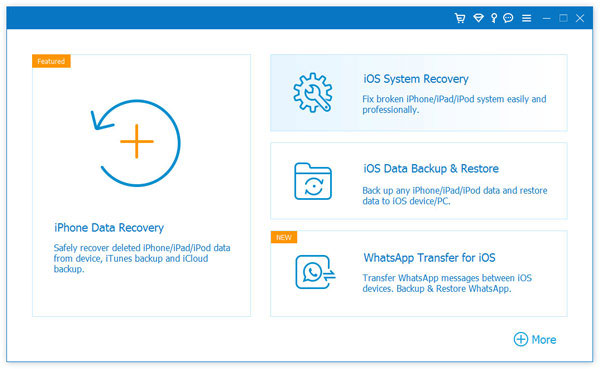
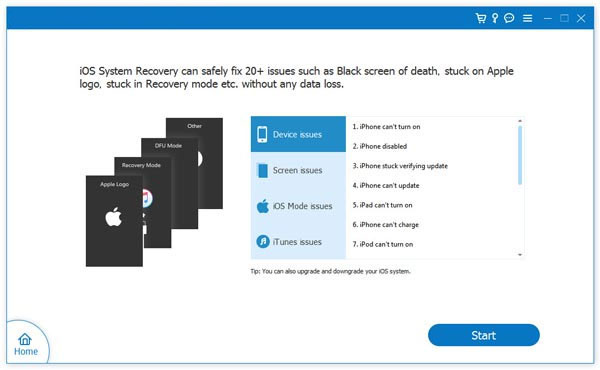
After installing the program on your computer, run it and connect your frozen iPhone with a USB cable. From the left-side menu, click "More Tools" and select "iPhone System Recovery" to access the system repair feature.
Step 2. Begin the iPhone repair
Click "Start" to move on to the repair process. The program will ask you to place the frozen iPhone into Recovery Mode or DFU Mode so it can communicate with and repair the device.
Step 3. Download the firmware package
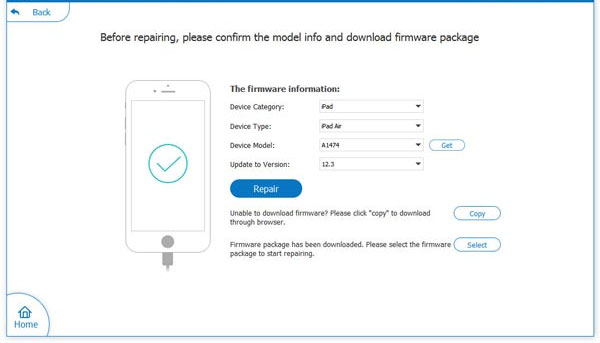
Choose the appropriate model information for your iPhone and click "Repair". The program will then download the required firmware package for your device. Wait a few minutes for the download to finish.
Step 4. Repair the frozen iPhone
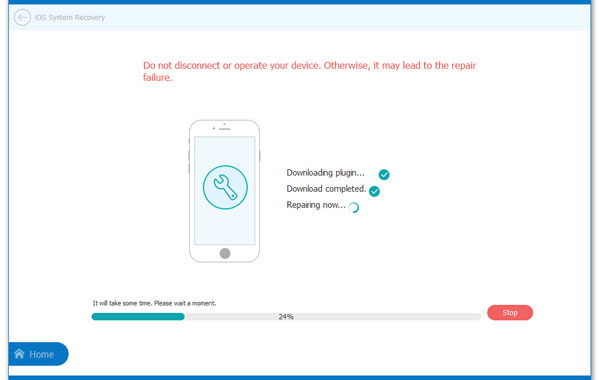
Once the firmware package has been downloaded, iOS System Recovery will begin repairing the system automatically. It can resolve problems such as a frozen iPhone and other related system errors. When the process is complete, your iPhone should restart and return to normal operation.
Part 4: FAQs About a Frozen iPhone
Q1: Can a low battery cause freezing?
Yes, a very low battery can sometimes make your iPhone slow, unresponsive, or even appear frozen. Connect it to a reliable charger and let it charge for a while before trying to use it again. If the screen remains frozen, try a force restart.
Q2: What if my iPhone freezes during charging?
First, unplug the charger and wait a few seconds. Then check whether the cable, adapter, or charging port has any visible damage or debris. Try another compatible charger if possible. If the iPhone is still frozen, perform a force restart and check whether it returns to normal.
Q3: How do I unfreeze my iPhone without losing data?
Start with a force restart, as it does not erase your personal data. If that does not work, you can connect the iPhone to a computer and use Recovery Mode to select "Update". This reinstalls iOS while generally keeping your personal data intact.
Q4: Will force restarting my iPhone delete anything?
No. A force restart does not erase your photos, messages, apps, contacts, or other personal files. It simply forces the iPhone to shut down and restart. So, if your iPhone is frozen or the touch screen is not responding, this is a safe first step to try.
Conclusion
A frozen iPhone can often be fixed without much trouble. Start with a force restart and make sure the device has enough power. If it is still unresponsive, try updating or restoring it through Recovery Mode. For more stubborn system problems, iOS System Recovery offers another repair option. If none of these methods work, contacting Apple Support is the safest next step.
Related Articles:
iPhone Dead? Here's Why & How to Revive Your Device
How to Fix iPhone Stuck on Zoom Mode? Here're Easy Solutions