
Android Phone Makes No Sound? 9 Cases & Corresponding Fixes
Q: Why is there no sound coming out of the speaker? A: So my Mom's phone randomly stopped producing any sound, and I can't really tell what the problem is by just going to the settings (yes, the sliders are on max). Is the problem inside the phone? How can I fix it?
It must be nettlesome and tantalising that the mobile phone doesn't ring, especially when you are trying to listen to some important or interesting voicemail messages or videos, right? But just calm down when you hear nothing from the device because it is not a serious issue as you think. On the contrary, you can follow the 9 means in this article to fix Android phone no sound easily.
- Case 1. The Android Phone Thinks I Have Headphones Plugged But I Don't
- Case 2. The Speaker on Android Stops Working Suddenly
- Case 3. The Device Mutes Automatically
- Case 4. Receive No Sound When Connecting to Bluetooth Speaker
- Case 5. App-Specific Sound Is Disabled or Bugged
- Case 6. Android System Sound Files Are Corrupted
- Case 7. Software Update Caused Audio Conflicts
- Case 8. Audio Output Is Redirected to a Secondary Device
- Case 9. Hardware Damage or Moisture Affects Audio Components
1. The Android Phone Thinks I Have Headphones Plugged But I Don't
Have you met the situation like this: a headphone icon displays on the device, but you do not plug in any headphones? If you have, your Android phone is probably stuck in the headphone mode. In this case, you are unable to hear anything from the phone unless you plug in the headphones. You can deal with this issue by several small tips:
- Turn up the volume: Press the Volume Up button of your Android phone to increase the volume and let it exit the mute mode.
- Re-plug the headphones: You can plug the headphone in and out several times and then reboot your phone to see whether the headphone icon disappears from the screen.
- Clear headphone jack: The headphone jack might be covered with dust or dirt, so you can use Q-tips to clean the holes. After finishing the cleaning, you can play a song to check the Android speaker.
- Restart the device: Just long-press the Power button to turn off your mobile phone and wait several minutes. Then reboot your phone to help the device refresh and fix software errors.
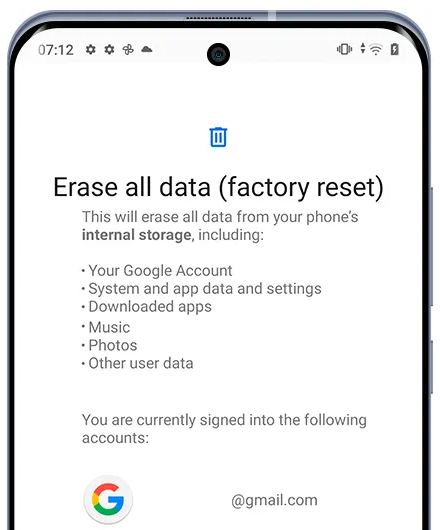
- Factory reset Android phone: Go to Settings > System > Reset options > Erase all data (factory reset) and confirm your choice. Alternatively, you can reset it using Recovery Mode by powering off the device, pressing the Power + Volume buttons, and selecting Wipe data/factory reset.
These methods can also be applied to fix the opposite problem: the speaker works well, but you cannot get any sound from the headphone. Except that, you can use a new set of headphone to solve the issue as well.
2. The Speaker on Android Stops Working Suddenly
The second situation we mentioned here is that the phone makes no sound at all. That means you cannot hear any ringing, music, notification alerts, and other sounds from your phone. This might be caused by a hardware issue. To confirm that, you can test the external and internal speakers of your phone with the help of the Device Diagnostic Tool.
Notice: The following guidance is based on a Samsung device, so if you are using other Android model, you need to search for a detailed tutorial to test the speaker on your phone.
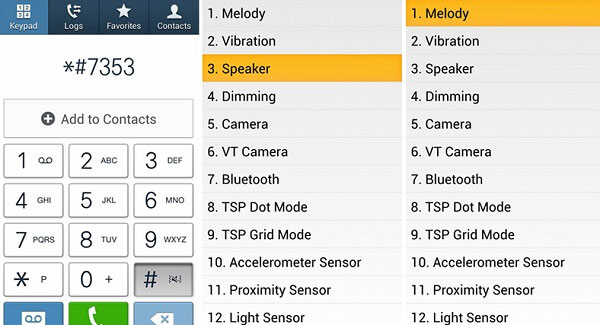
- Dialing "*#7353#" to enter the Device Diagnostic Tool menu.
- For testing the external speaker, you need to tap on Speaker. If it is working fine, you will hear loud music coming from your phone. Then click Speaker again to silence the phone.
- To check the internal speaker, you can tap on Melody and then there will be music coming from the earpiece if it works well.
If your device passes the test, that means there is nothing wrong with the hardware, and you can use the skills below to fix the software issue:
- Reboot your Android phone: Just restart your phone as usual to refresh the device.
- Disable Bluetooth on your phone: Sometimes the Bluetooth feature would result in the speaker problem, so here you are able to navigate to Settings> Bluetooth to switch off the feature to settle the problem.
3. The Device Mutes Automatically
Users also complain that the Android phone mutes automatically when they are making a phone call, or it turns into silent or vibrant mode even though they have set the device to answer ring pattern. This case might be caused by some third-party applications or useless caches so you have two methods to solve this problem.
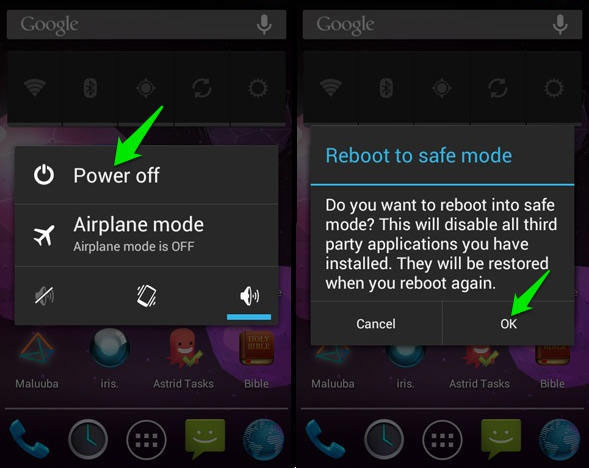
- Check the applications in Safe Mode: To enter the Safe Mode, you need to turn off your phone at first. Then hold down the Power key once again until the mobile phone asks you whether you want to enter Safe Mode. Tap on OK and then your phone will be booted into Safe Mode. After entering the Safe Mode, you can check if your phone mutes itself.
If not, that means the speaker issue is caused by third-party applications so you need to find out the App that you have installed recently and then remove it.
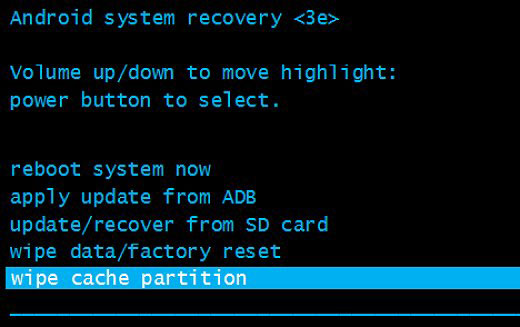
- Wipe cache partition: To begin this process, you have to enter the Recovery Mode on your Android. In the Recovery Mode, you can use the Volume Down button to select Wipe Cache Partition from the menu and press Power to confirm that. Once the wiping process ends, you need to choose Reboot system now to restart your phone.
Normally, these two ways can solve the Android phone no sound issue effectively.
4. Receive No Sound When Connecting to Bluetooth Speaker
Another common situation is that users fail to receive sounds when they connect the device to a Bluetooth speaker. While you face this issue, you can:
- Enable the Bluetooth feature on your phone: Firstly, check if the Bluetooth speaker/handset works on another phone or another Bluetooth device works on your phone. If they are, you need to pair the Bluetooth handsets or speaker to your phone once again. Then go to Settings> Bluetooth and double click on the Byte Headset icon and then tap on Listen to music.
Now you are supposed to get sounds from a Bluetooth speaker. If not, you need to turn to a professional and ask them to fix the error.
5. App-Specific Sound Is Disabled or Bugged
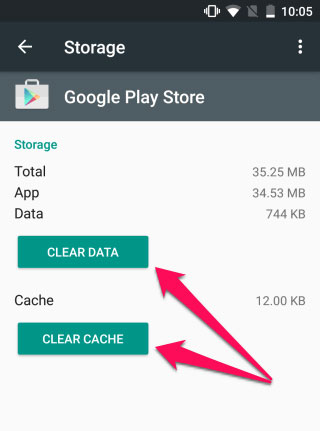
Sometimes the phone has sound, but certain apps (such as games, streaming apps, or social media platforms) remain silent due to in-app mute settings or temporary glitches. Open the affected app and carefully check its internal sound or media settings to ensure audio is enabled.
- If the issue continues, go to Settings > Apps, clear the app cache, update the app to the latest version, or reinstall it to remove any corrupted app data that may be causing the problem.
6. Android System Sound Files Are Corrupted
Corrupted or missing system sound files can prevent notifications, media playback, or ringtones from working properly across the entire device. You can restart the phone in Safe Mode to determine whether third-party apps are interfering with system audio.
- If sound still doesn't work, using a professional Android system repair tool or performing a factory reset (after backing up important data) can help restore damaged system files and bring audio back to normal.
7. Software Update Caused Audio Conflicts
A recent Android update may introduce compatibility issues that interfere with sound output, especially with older apps or custom system settings. Check for follow-up system patches or security updates, as manufacturers often release fixes shortly after major updates.
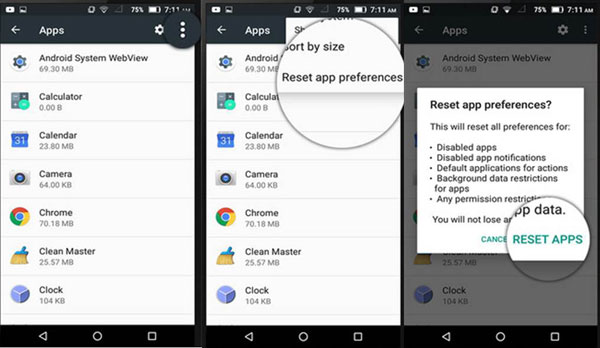
- You can also reset app preferences or uninstall recently updated apps to eliminate conflicts and restore normal audio behavior.
8. Audio Output Is Redirected to a Secondary Device
Your Android phone may be routing sound to a secondary device, such as Android Auto, a smart TV, wireless earbuds, or another Bluetooth-enabled device running in the background. Navigate to Settings > Connected devices and manually disconnect any inactive or forgotten connections. Restarting the phone afterward helps refresh the audio routing and forces sound output back to the built-in speaker.
9. Hardware Damage or Moisture Affects Audio Components
Exposure to water, dust, or a recent drop can damage internal audio components, leading to complete or partial sound loss. Power off the device immediately to prevent further damage and avoid charging it until it is fully dry.
- If audio does not return after drying and basic troubleshooting, professional inspection at an authorized repair center is usually required to repair or replace the affected hardware components.
Related Articles:
Need to Sell Broken Phones for Cash? Concerns, Platforms, & Instructions
How to Recover Contacts from Broken Phone? 5 Hassle-free Solutions
Upgrading Your Phone? 18 Things to Do When You Get a New Phone
No Sound on iPhone 17/16/15? Here Are the 10 Possible Fixes!